The debate between silver amalgam and composite resin fillings goes deeper than aesthetics or mercury fears. Both materials have real trade-offs involving tooth structure, chemical composition, and removal safety — and the right choice depends on your specific situation.
The Hidden Structural Cost of Silver Fillings
Most conversations about amalgam focus on how long the filling lasts. What rarely gets discussed is what happens to the tooth over that same period. For Kissimmee-area patients, understanding these structural differences is key to long-term health.
Amalgam is a non-bonded metal. It doesn't chemically adhere to your tooth — it sits inside a mechanically carved cavity, held in place by friction and shape. Here's the structural problem: metal and tooth enamel expand and contract at different rates when exposed to temperature changes. Over years and decades, this differential movement acts like a slow wedge, creating micro-fractures in the surrounding enamel — what we call "craze lines." I see this regularly in patients who come in with older amalgam restorations. The filling itself may look serviceable, but the tooth around it has begun to split.
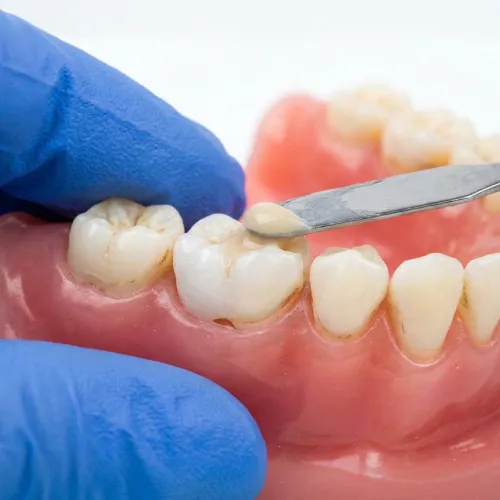
Composite resin works differently. It bonds micromechanically to the tooth structure through an adhesive layer, which actually pulls the walls of the tooth together rather than pushing against them. This means composite doesn't just fill a cavity — it reinforces the remaining tooth structure.
According to the ADA's oral health topics page, composite materials bond directly to tooth structure, an advantage that amalgam simply cannot offer. The trade-off is that composites require more moisture control during placement and are more technique-sensitive. That's why your dentist's skill matters as much as the material itself.
For large posterior cavity fillings under heavy chewing forces, amalgam's brute durability has historically been the standard recommendation. But for preserving the long-term integrity of the tooth as a whole, the bonding advantage of composite is clinically meaningful — especially for patients who want to avoid future fractures requiring crowns.
Is Amalgam Actually Safe? What the Evidence Says (And Doesn't)
This is the question I get most often, and I want to give you an honest, nuanced answer rather than a reflexive one.
The mainstream consensus — from the ADA, FDA, and WHO — is that amalgam is safe for most of the general population. The NIDCR's expert Q&A on silver fillings confirms that current evidence does not show that exposure to mercury from dental amalgam causes harm in healthy adults. Mercury vapor is released in small amounts during chewing, but levels measured in most patients fall well below established toxicity thresholds.
That said, "safe for most people" is not the same as "safe for everyone." The Minamata Convention on Mercury — a treaty now ratified by over 127 countries — specifically calls for phasing down amalgam use, particularly for vulnerable groups. Current guidance advises avoiding amalgam in children under 15, pregnant and breastfeeding individuals, and people with kidney impairment.
There's also a broader shift happening. The Indian Health Service announced it will stop using dental amalgam in its facilities by 2027, following international phase-down commitments. The ADA acknowledged this development while reaffirming that removal of clinically serviceable amalgam fillings solely to replace them is not recommended — and I agree with that position. Drilling out a stable filling creates more mercury exposure than leaving it alone.
The bottom line: if you have existing amalgam fillings in good condition and no specific health vulnerabilities, the evidence does not support urgent removal. If you're pregnant, planning to become pregnant, or have young children, that conversation is worth having with your dentist. Our family dentistry services are designed to address exactly these kinds of concerns across all ages and life stages.
Mercury-Free Fillings: The BPA Question Nobody Asks
So you've decided you want mercury-free. Composite resin is the obvious choice — but here's what most patients don't know to ask: not all composites are created equal when it comes to chemical safety.
Many traditional composite resins are formulated with Bis-GMA (bisphenol A glycidyl methacrylate) as their resin matrix. As the ADA's materials overview notes, Bis-GMA has been the dominant matrix component in composites since the 1960s. The concern is that Bis-GMA is structurally related to BPA, a known endocrine disruptor, and may release trace amounts of BPA through hydrolysis in the oral environment.
If you're choosing composite specifically to minimize chemical exposure, this matters. Before your appointment, ask your dentist these specific questions:
- Does this composite contain Bis-GMA? Some newer formulations use alternative monomers specifically to eliminate BPA-related compounds.
- Is there a ceramic-based or Bis-GMA-free option available? Materials like ormocer-based composites (organically modified ceramics) offer a genuinely different chemical profile.
- What filler particle size is used? Nanofill and nanohybrid composites generally require less monomer content, reducing potential leachable compounds.
Glass ionomer is another mercury-free alternative worth discussing for certain cavity types. It releases fluoride, bonds chemically to tooth structure, and has a comparatively high biocompatibility profile — though it lacks the fracture strength needed for high-stress posterior restorations.
The goal of a truly health-conscious filling choice isn't just avoiding mercury. It's understanding the full chemical picture of whatever material goes into your mouth. Staying current with your cleaning and exam appointments also helps catch any issues with existing restorations before they become more serious problems.
If You're Considering Amalgam Removal: The SMART Protocol
If you and your dentist have decided that replacing old amalgam fillings is clinically appropriate, how that removal is performed matters enormously.
Drilling out an amalgam filling without precautions creates a significant spike in mercury vapor — far higher than the background release from an intact filling. This exposes both you and the dental team to levels that should not be taken lightly.
The SMART protocol (Safe Mercury Amalgam Removal Technique) is a set of procedures specifically designed to minimize this exposure. At my practice, a safe amalgam removal procedure involves:
- Rubber dam isolation to prevent mercury particles from being swallowed
- High-volume evacuation with specialized suction positioned close to the tooth
- Sectioning the filling into chunks rather than grinding it out, which reduces the vaporization surface area
- External oxygen supply for the patient during removal in some protocols
- Immediate disposal of amalgam debris using proper amalgam separators
Cleveland Clinic notes that removing amalgam fillings without clinical justification can actually cause more harm than leaving stable restorations in place — and this is precisely why protocol matters when removal is indicated.
If a dentist offers amalgam removal without discussing any protective measures, that's a red flag. Ask specifically what precautions they use. A well-equipped, protocol-driven removal is a very different procedure from a routine filling replacement. In some cases, a damaged tooth following removal may also require a tooth crown to restore its full strength and function.
Ready to Discuss Your Options in Kissimmee?
Choosing the right filling material is a clinical decision — not a marketing one. At Prestige Dental in Kissimmee, I take time to review your specific cavity size, location, bite forces, health history, and material preferences before recommending anything.
Whether you're looking for a tooth-colored composite, asking about BPA-free options, or want to discuss an existing amalgam restoration, I'm here to give you a straight answer. If you're also interested in improving the overall appearance of your smile, our aesthetic dentistry services offer a range of options to complement your restorative care. Schedule a consultation and we'll look at what's actually in your mouth — not just what's trending online.
This article is for informational purposes only and does not constitute medical or dental advice. Individual clinical situations vary. Please consult a licensed dental professional for diagnosis and treatment recommendations specific to your needs.