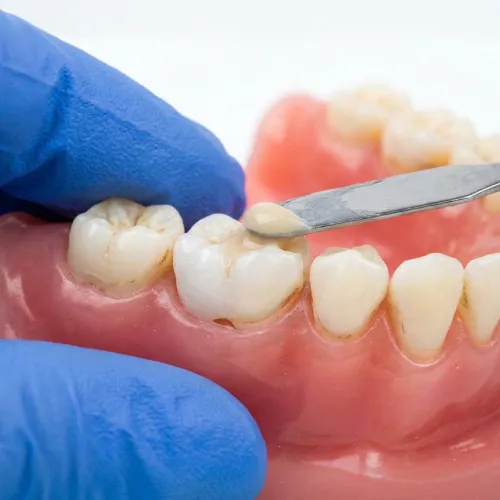
Dental bonding can close tooth gaps quickly using tooth-colored composite resin shaped directly onto your teeth — but it's not the right solution for every patient. Your bite, gum health, and whether you've just finished Invisalign all determine whether bonding will hold long-term or fail repeatedly.
If You Just Finished Invisalign, Read This Before Getting Bonding
Many patients leave their final Invisalign appointment with nearly perfect teeth — but a few small gaps or chipped edges remain. For Kissimmee-area patients, bonding seems like the obvious next step. There's a catch, though, and most patients don't hear about it until something goes wrong.
Your custom retainers — the thermoformed trays fabricated from a scan of your finished teeth — must fit your teeth precisely. If bonding is applied after those retainers are already made, the newly shaped composite changes the contour of your teeth. Forcing an old tray over bonded teeth can shear the composite right off. Going without a retainer while waiting for a new one puts you at real risk of orthodontic relapse.
The correct clinical sequence matters enormously. Bonding should happen after attachments are removed but before the final digital scan for retainers is taken. That way, the retainer is fabricated to fit your bonded teeth — not your pre-bonding teeth. In the short window between bonding and receiving your new retainer, a dentist can temporarily trim an existing tray to accommodate the altered tooth shape for 24–48 hours. It's a small detail that prevents a frustrating and expensive problem.
Why Your Bite Determines Whether Bonding Will Actually Hold
Bonding works beautifully for patients with the right bite. For others, it's a temporary fix that keeps breaking — and they never understand why.
According to WebMD, composite resin is not as strong as natural tooth enamel and can chip or separate from the tooth under pressure. That pressure becomes a serious problem when a patient has a deep bite — where the upper front teeth overlap the lower front teeth excessively.
During normal chewing, and especially during nighttime grinding, the lower teeth strike the backside of the bonded composite with what dentists call "shear force." This force is directional and repetitive, and it will snap bonding off the tooth over and over, no matter how well it was applied.
A simple self-check: bite down naturally and look in a mirror. If your lower front teeth are barely visible — nearly hidden behind your uppers — you likely have a deep bite. If your teeth also grind during sleep, the risk compounds. For these patients, orthodontic treatment to correct the bite is the structurally sound path forward. Bonding over an uncorrected deep bite isn't a cosmetic upgrade; it's a cycle of repairs.
Patients without bite issues, however, are excellent candidates. A Healthline overview of teeth bonding confirms that bonding is fast, typically completed in 30 to 60 minutes per tooth, requires no anesthesia in most cases, and involves no downtime.
The Hidden Risk of Gap Closure: Gum Inflammation Nobody Warned You About
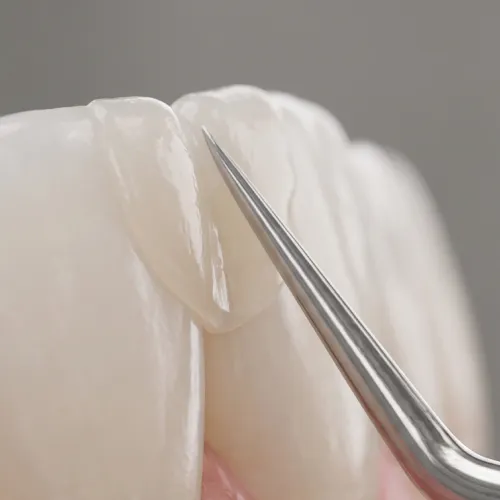
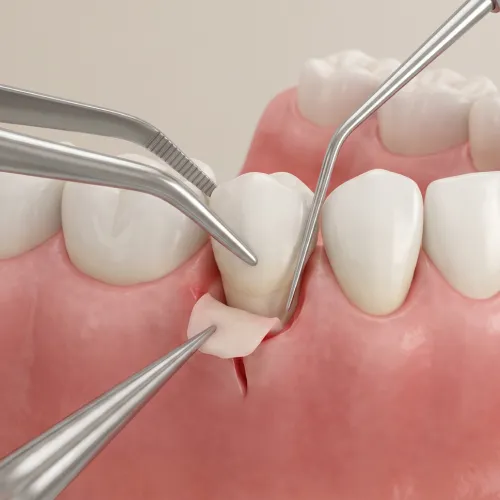
Closing a gap with composite resin isn't just a matter of adding material. It requires widening each tooth near the gumline — and how that composite transitions from tooth to gum is everything.
When the composite isn't perfectly contoured at the base, it creates a microscopic ledge or overhang. That ledge is a permanent plaque trap. Floss can't clean it properly — you may notice the floss shredding or catching in exactly that spot. Over time, localized gingivitis develops: bleeding, swelling, and sometimes persistent bad breath at just that one location. Left untreated, this can progress into gum disease that requires professional intervention.
This concept is called the "emergence profile" — the shape of a tooth or restoration as it exits the gumline. In skilled hands, dentists use specialized matrix bands during the bonding procedure to mold composite into a smooth, seamless curve that mimics natural tooth anatomy. Research published in PMC highlights how direct composite diastema closure requires considerable finishing and polishing skill to avoid exactly this kind of gingival complication.
Warning signs of a poorly contoured gap closure include floss that shreds consistently in one spot, gums that bleed only near the bonded teeth, or a feeling that something is "catching" when you floss. These aren't minor annoyances — they signal an ongoing infection risk that needs professional attention.
Bonding vs. Braces: Choosing the Right Tool for Your Gap
Both options close gaps. They work through completely different mechanisms, and the size and cause of your gap determines which one is appropriate.
A Healthline review on teeth fillers for gaps explains that braces use tension to gradually move teeth together, making them effective for larger gaps and for patients who have multiple spacing issues throughout the mouth. Bonding, by contrast, adds composite to the sides of existing teeth to visually close the space — the teeth themselves don't move.
For small, isolated gaps in patients with healthy bites and gums, bonding offers a fast, single-appointment solution. According to Healthline's overview of diastema, porcelain veneers and bonding are both appropriate cosmetic options when the gap doesn't stem from an underlying structural problem like gum disease or severe misalignment. Cleveland Clinic similarly notes that dental bonding is a viable alternative to braces for closing gaps when the patient's overall alignment and bite are suitable.
Braces or Invisalign become the better choice when:
- The gap is large (generally over 2–3 mm)
- Multiple gaps exist throughout the mouth
- The patient has a deep bite or significant misalignment
- The gap is caused by missing teeth or bone loss
Bonding is also not reversible in the sense that tooth surfaces are etched before composite is applied. It's a commitment — though a far less invasive one than veneers, which require removing healthy enamel.
At Prestige Dental, we evaluate each patient individually before recommending bonding, braces, or a combination approach. As part of our family dentistry services, we offer comprehensive consultations to find the right solution for your smile. If you're in the Kissimmee or greater Orlando area and wondering whether your gap is a bonding candidate, scheduling a cleaning and exam is the best place to start.
This article is for informational purposes only and does not constitute dental or medical advice. Always consult a licensed dental professional for diagnosis and treatment recommendations specific to your situation.