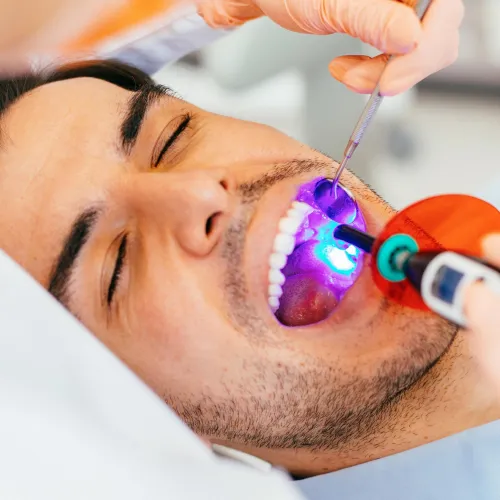
Does Whitening Toothpaste Actually Work or Is It Damaging Your Teeth?
Does whitening toothpaste actually work or damage enamel? Learn why your teeth may still look yellow and discover safe whitening tips from Prestige Dental.
Read More
Cosmetic Dentistry
Whitening toothpastes can remove surface stains, but most fall far short of the bright results they advertise — and some may actually be making your teeth look more yellow over time. Understanding why requires a closer look at how these products work at the enamel level. For a more reliable path to a brighter smile, pro teeth whitening from a dental professional delivers results that over-the-counter products simply can't match.
For Kissimmee-area patients, this is one of the most common frustrations patients bring up. They brush faithfully with a whitening toothpaste, yet their teeth stay dull or seem to yellow faster than before. There are two hidden mechanisms most product labels never explain.
The enamel-abrasion trap. Whitening toothpastes rely on abrasive particles — typically hydrated silica or calcium carbonate — to scrub surface stains away. Each toothpaste is assigned a Relative Dentin Abrasivity (RDA) score. Products like Colgate Optic White carry higher RDA scores than sensitivity-focused options like Sensodyne ProNamel, which sits at the gentler end of the scale. On its own, that abrasion is manageable. But pair a high-RDA paste with a high-frequency sonic or oscillating electric toothbrush, and the mechanical force multiplies. The combined abrasion strips the outer enamel layer faster than it can remineralize, gradually exposing the naturally yellow dentin beneath. The result? Teeth that look progressively more yellow despite the whitening label on the tube.
The rebound staining window. Abrasive brushing also strips the acquired salivary pellicle — a thin, protective protein film that coats enamel within minutes of rinsing. When harsh abrasives remove this pellicle and leave micro-scratches on the enamel surface, chromogens (the pigment molecules in coffee, tea, and red wine) settle directly into those grooves before the pellicle can regenerate. That regeneration takes roughly 60 minutes. Drinking or eating staining foods and beverages during that critical window essentially locks pigment into freshly abraded enamel, accelerating discoloration rather than preventing it.
According to the ADA, extrinsic stains can be reduced with mechanical interventions like whitening toothpastes, but these products will not have a significant impact on intrinsic stains or the underlying color of the tooth.
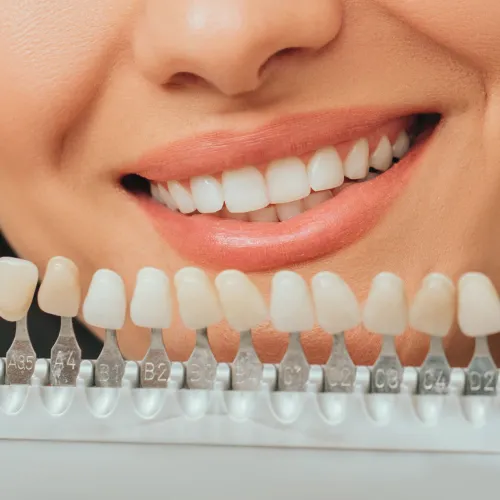
Whitening toothpastes work through two basic mechanisms: physical abrasion to remove surface stains, and in some formulas, a small amount of peroxide to address slightly deeper discoloration. As WebMD explains, whitening toothpastes can lighten tooth color by roughly one shade, while professional in-office whitening can achieve three to eight shades of improvement.
There's another effect worth understanding: optical brighteners like Blue Covarine. Some whitening toothpastes deposit a blue-tinted pigment on the enamel surface immediately after brushing, which temporarily neutralizes yellow tones through color contrast. Teeth look noticeably brighter right after spitting — then gradually return to their baseline shade as saliva rinses the pigment away. It's an optical illusion, not actual whitening.
Peroxide-based whitening works differently. Hydrogen peroxide or carbamide peroxide must remain in contact with the tooth for 15 to 30 minutes or longer to oxidize the pigment compounds embedded in dentin. Brushing lasts under two minutes. That contact time deficit means toothpaste peroxide concentrations — which are far lower than professional-grade gels to begin with — simply cannot drive the sustained chemical reaction needed for meaningful intrinsic whitening.
Mouthhealthy.org notes that yellow teeth generally respond well to bleaching, while brown or gray-toned teeth may respond poorly or not at all — a distinction that no over-the-counter product can assess for you.
Dentists don't universally oppose whitening toothpastes, but they do flag specific scenarios where these products can cause harm. Harvard Health Publishing points out that bleaching can be uncomfortable for people with sensitive teeth or gum recession, and that most whitening products only affect natural tooth enamel — meaning tooth crowns, porcelain veneers, and composite fillings won't respond, leaving visible color mismatches.
Overuse is a growing concern. Experts warn that continuous use of whitening products has been shown to damage enamel and gums, cause tooth sensitivity, and lead to translucent-looking teeth that reveal the inner yellow dentin layer — the opposite of the intended result.
The ADA recommends consulting a dentist before using any bleaching product, particularly if you have sensitive teeth, dental restorations, very dark staining, or significant cavity fillings. A dentist can evaluate whether whitening is appropriate, identify the type of discoloration present, and recommend a safe approach.
Healthline reports that while whitening toothpastes work and can improve your smile over time, they are not as fast or effective as whitening strips or professional dental treatments. That gap widens considerably when comparing toothpaste to in-office bleaching.
Professional treatments use higher concentrations of whitening agents applied under controlled conditions, with custom trays or barriers protecting gum tissue. The contact time is sufficient for genuine intrinsic whitening. Results are faster, more dramatic, and more predictable — and a dental professional can monitor for early signs of sensitivity or enamel stress before they become problems.
If your goal is simply to maintain a clean smile between professional cleaning and exam appointments, a gentle, ADA-accepted whitening toothpaste used with a soft-bristled brush can be a reasonable part of your routine. But if you're chasing meaningful whitening results, a professional evaluation is the most reliable starting point.
If you're in the Kissimmee or greater Orlando area and tired of whitening toothpastes that overpromise and underdeliver, Prestige Dental is here to help. Our team offers comprehensive aesthetic dentistry services, including assessing your tooth discoloration, identifying whether surface stains or intrinsic color are the issue, and recommending a whitening approach matched to your specific smile. Schedule a consultation today.
Medical disclaimer: This article is intended for informational purposes only and does not constitute professional dental or medical advice. Always consult a licensed dental professional before beginning any whitening treatment.


Mon - Thur 9am-5pm
Wed Closed
Tue - Fri 9am-5pm
Sat - Sun Closed
312 W. Bass St.
Kissimmee, FL 34741
Local Dentist in Kissimmee, FL