No-prep veneers skip the tooth grinding, but that convenience comes with real trade-offs — including bite incompatibility, a misunderstood "reversibility" claim, and gum health risks tied to how the veneer meets your gumline. Here's what to weigh before deciding.
The "Reversibility" Promise Is More Complicated Than It Sounds
For Kissimmee-area patients, one of the biggest selling points of no-prep veneers is that they're reversible. No enamel removed, no permanent commitment — right? The reality is more nuanced.
According to Healthline, no-prep veneers are applied directly to the enamel surface, which means removal is still possible. But here's what most guides skip over: getting them off isn't a passive process.
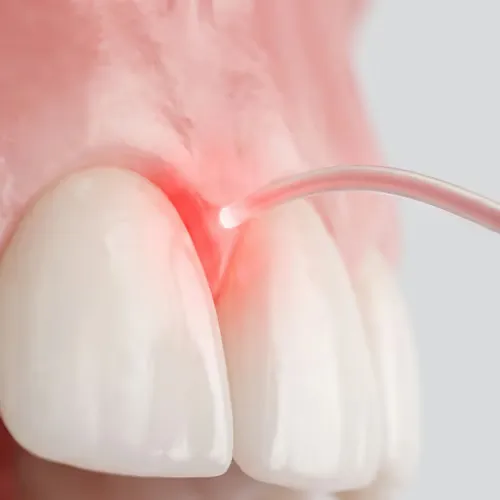
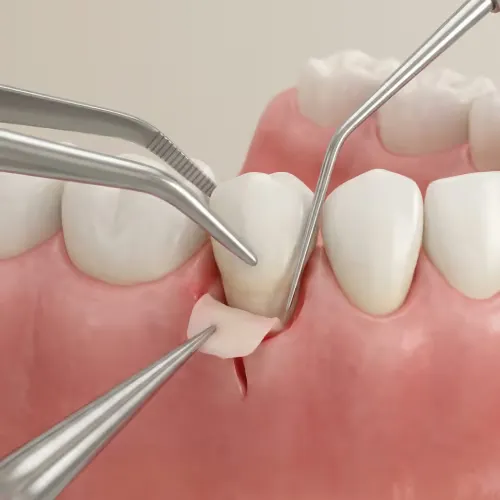
Removing bonded porcelain requires rotary burs, air abrasion, or laser debonding tools. These methods inevitably affect the outermost enamel prism layer — the microscopic surface structure that gives teeth their natural gloss. Acid etching during the original bonding process also alters that surface chemistry. After removal, your teeth may look slightly duller or feel rougher, and returning them to their exact pre-veneer texture often requires polishing or minor bonding work.
This doesn't mean no-prep veneers are a bad choice. It means "reversible" should be understood as less invasive than traditional veneers, not zero consequence. Anyone expecting to remove them and find perfectly untouched enamel underneath may be disappointed.
Traditional porcelain veneers, by contrast, require grinding down roughly 0.5mm of enamel before placement — a genuinely permanent alteration. A WebMD overview of veneers notes that this enamel removal is what makes traditional veneers a long-term commitment. No-prep veneers avoid that step, which is a meaningful distinction — just not a guarantee of zero impact.
Do Teeth Rot Under No-Prep Veneers? The Gumline Problem
This is one of the most common patient concerns, and the standard answer — "just brush and floss" — undersells the real issue.
With traditional veneers, the dentist removes enamel to create a flush chamfer margin at the gumline. The veneer sits cleanly against the tooth. No-prep veneers, by contrast, are bonded directly over the existing tooth surface. Because no material is removed, the veneer adds thickness at the gumline rather than replacing it.
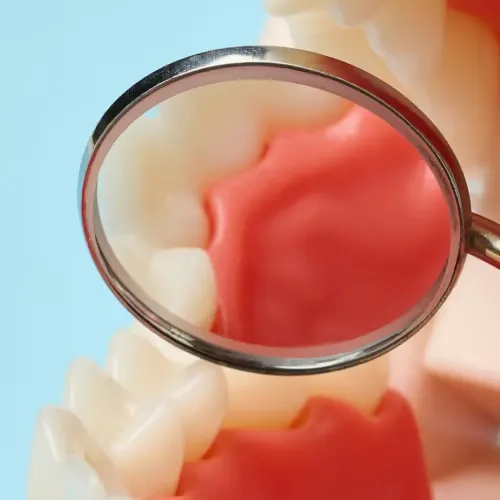
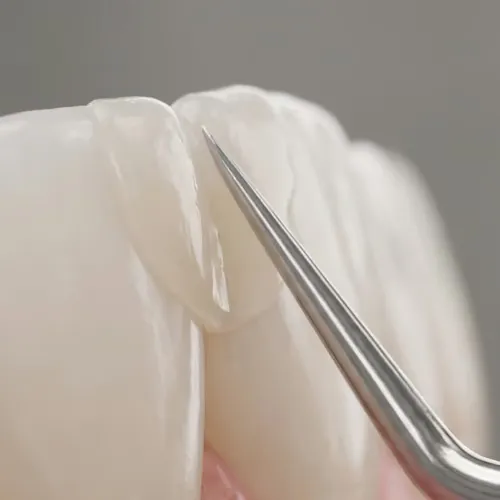
This creates what clinicians call an over-contoured cervical margin — essentially a small ledge where the veneer meets the tooth near the gum. That ledge disrupts the natural emergence profile (the angle at which the tooth rises from the gum). Biofilm accumulates in that space mechanically, not just because of poor hygiene. Flossing can't always reach the ledge geometry the way it clears a flush margin.
Over time, this localized plaque trap can lead to gum disease gingivitis and, in more serious cases, root caries at the margin. So yes, teeth can develop decay under no-prep veneers — but the mechanism is often structural, not purely a hygiene failure.
Aspen Dental's guide on veneer pros and cons notes that veneers can make it harder to reach the gumline during cleaning, increasing cavity and gum disease risk near the margin. That risk is amplified when the margin itself creates an overhang.
This is why patient selection and dentist skill matter enormously with prepless options. A well-designed no-prep veneer tapers to an ultra-thin margin. A poorly fitted one creates a ledge that no amount of brushing can fully compensate for.
When Your Bite Disqualifies You From No-Prep Veneers
General articles say no-prep veneers "aren't for everyone" without explaining why certain patients get turned away. The reason is usually mechanical, and it comes down to bite geometry.
No-prep veneers add 0.2mm–0.5mm directly onto the facial and incisal surfaces of teeth. For patients with adequate spacing, this is manageable. But for patients with a deep bite (where upper front teeth significantly overlap lower ones) or an edge-to-edge bite (where upper and lower incisors meet directly), that added thickness lands directly in the path of opposing teeth.
The result is immediate shearing force on the veneer — leading to fracture, debonding, or both. A Healthline comparison of veneers and Lumineers confirms that Lumineers and similar no-prep options are less effective for patients with severe bite or structural issues.
Interestingly, some patients are better candidates precisely because of their tooth shape. People with retroclined (slightly tilted inward) front teeth or microdontia — including peg laterals — naturally have more facial clearance. Adding a thin veneer can actually improve the emergence profile rather than overcrowding it.
The takeaway: bite classification isn't just a formality. It's the primary mechanical factor separating a successful no-prep case from a failed one.
So Is a No-Prep Veneer Actually Better?
"Better" depends entirely on the clinical situation. Healthline's overview of dental veneers lays out the core comparison clearly: no-prep veneers are faster, less invasive, and skip anesthesia in most cases — but they're less effective at masking severe staining, structural damage, or significant misalignment.
Traditional porcelain veneers last 10–15 years on average, with some research suggesting success rates beyond 20 years. No-prep options typically last 5–7 years, though some brands claim longer with ideal care.
For patients with minor discoloration, small gaps, or slightly uneven teeth — and a bite that accommodates the added thickness — no-prep veneers offer a genuinely strong cosmetic result with less chair time. Patients seeking pro teeth whitening or other cosmetic improvements alongside veneers may also want to discuss sequencing with their dentist. For patients with deeper staining, structural concerns, or incompatible bite patterns, traditional veneers or other restorations will likely serve them better long-term.
The right answer isn't about which type is universally superior. It's about which type fits your anatomy.
See What's Right for Your Smile in Kissimmee
Every smile is different, and veneer candidacy depends on factors only a clinical exam can confirm — including your bite, enamel condition, and gumline anatomy. Prestige Dental serves patients throughout Kissimmee and Central Florida and can help you understand exactly which veneer option — or alternative — fits your specific situation. Whether you're exploring aesthetic dentistry options or simply want a cleaning and exam before making any decisions, schedule a consultation to get a clear, honest picture of your options.
This article is for informational purposes only and does not constitute dental or medical advice. Always consult a licensed dental professional before beginning any treatment.