Best Mouthwash for Gum Disease: What Actually Works (and What Doesn't)
Looking for the best mouthwash for gum disease? Discover what works to fight gingivitis, top alcohol-free rinses, and expert picks. Read our full guide today!
Read More
Cosmetic Dentistry, Specialty Dentistry
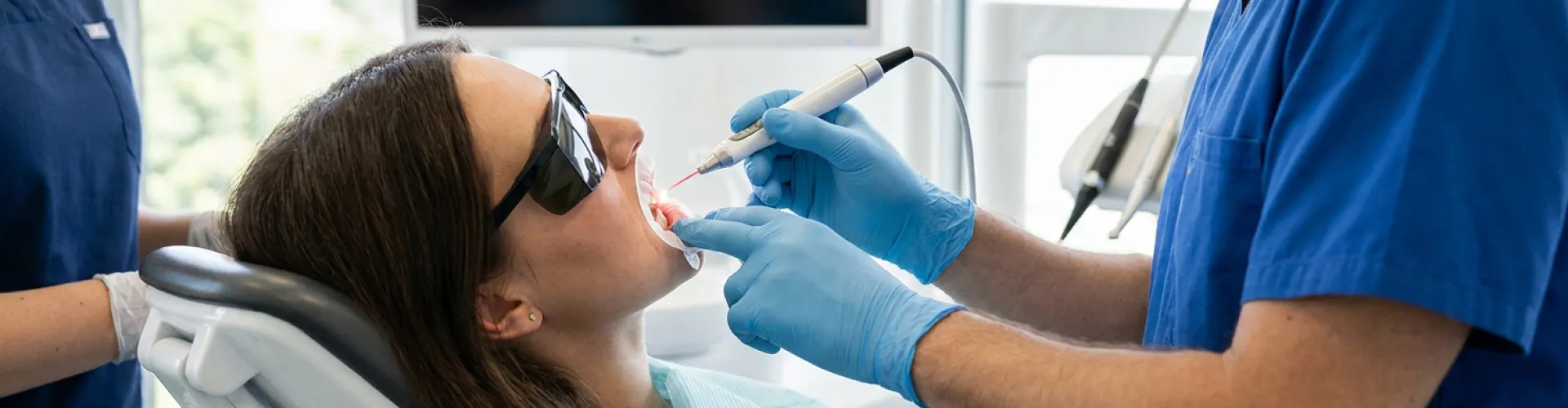
Gum contouring is a same-visit procedure that reshapes your gumline, and most patients recover within one to two weeks. Recovery pain and healing time depend heavily on whether your dentist uses a laser or scalpel — and what you eat afterward matters more than most guides will tell you. If you're considering this as part of a broader smile transformation, it's worth exploring aesthetic dentistry options to understand what's possible.
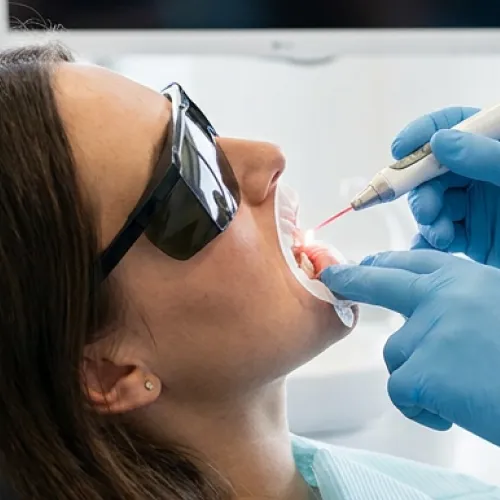
Most articles give you one recovery timeline for gum contouring. That's misleading. The tool your dentist uses — a soft-tissue laser or a traditional scalpel — produces dramatically different recovery experiences. For Kissimmee-area patients, understanding these differences helps set realistic expectations.
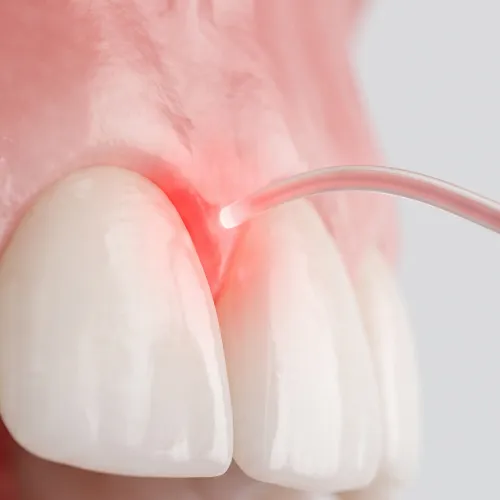
As Healthline explains, lasers are increasingly common because they cauterize tissue as they cut, which means less bleeding, faster sealing of nerve endings, and a lower infection risk compared to metal instruments.
Laser recovery (day by day):
Scalpel recovery (day by day):
Both approaches are effective. According to WebMD, dentists use scalpels, lasers, and radiosurgery depending on the patient's situation — so ask your provider which method applies to you before forming recovery expectations.
The takeaway: laser contouring is not just a comfort upgrade. It meaningfully shortens your recovery and reduces your bleeding risk. If your practice offers both, it's worth asking which is right for your case.
Here's where a lot of patients accidentally terrify themselves. Search engines regularly mix gum contouring results with gum grafting results — and the two procedures are nothing alike.
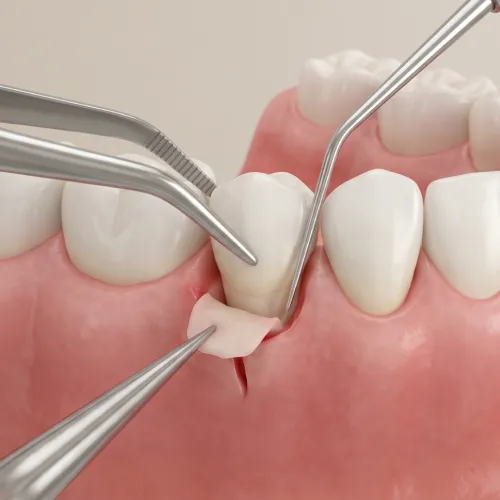
Gum contouring (gingivectomy): A subtraction procedure. Excess gum tissue is removed to expose more of the tooth. No secondary surgical site. One area heals.
Gum grafting: An addition procedure. Tissue is harvested from the roof of your mouth (the palate) and stitched onto receding gums. As WebMD notes, this creates two healing sites — the graft area and the donor site — making recovery significantly more involved and uncomfortable.
If you're having contouring done, you do not have a palate wound. You will not experience the roof-of-mouth soreness described in grafting recovery guides. The horror stories you may have read online about eating only cold liquids for weeks, or managing a second surgical wound, apply to grafting — not contouring.
Gum contouring recovery is real but relatively mild. Local anesthesia is used during the procedure, and most patients describe post-procedure discomfort as manageable soreness rather than sharp pain. The gums may feel tender and look swollen for several days, but the absence of a donor site makes a significant difference in overall recovery burden.
Untreated gum issues can sometimes escalate — if you're experiencing more serious symptoms, learning about gum disease can help you understand when to seek prompt care.
Every recovery guide says eat soft foods. Almost none of them warn you about the particle problem — and it's a serious one.
Tiny grains and seeds don't stay where you put them. Foods like oatmeal, quinoa, rice, and berry smoothies break into microscopic particles that slip under your freshly cut gumline. Because you can't brush vigorously during healing, those particles sit in the sulcus (the space between tooth and gum), rot, and create localized infection or disrupt the healing tissue directly.
Zero-particle foods to prioritize:
Soft foods that are actually risky:
Research published in PMC highlights that post-surgical wound healing in soft tissue is highly sensitive to contamination and disruption — keeping the surgical site clean is directly tied to healing outcomes.
The rule of thumb: if you can see texture in the food, assume it can find its way under your gumline. Smooth, seedless, and temperature-neutral (not scalding, not icy) is your recovery standard.
Keeping up with your cleaning and exam appointments before and after any gum procedure also plays a key role in maintaining a healthy healing environment.
Pain tolerance varies, but the procedure itself should not hurt. Local anesthesia numbs the area before any cutting begins. According to Healthline's overview of gum contouring, the procedure typically takes one to two hours depending on how much reshaping is needed — and patients remain awake throughout.
Post-procedure soreness is the more relevant concern. Expect:
Over-the-counter pain relievers are typically sufficient. Your provider may also prescribe a special rinse to protect the area. Most patients find the discomfort manageable — and the results worth it. A study in PMC on gummy smile correction confirms that laser-assisted gingivectomy, in particular, is well-tolerated with minimal postoperative discomfort.
Full gum healing takes several weeks even when surface soreness resolves early. Avoid hard, crunchy, or spicy foods until your provider clears you — even if you feel fine sooner than expected.
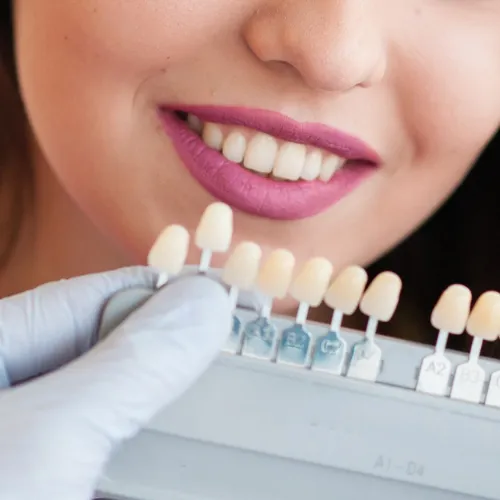
Many patients who pursue gum contouring also ask about porcelain veneers or pro teeth whitening to complement their refreshed gumline — your provider can help you sequence treatments for the best overall result.
If you're in the Kissimmee or greater Central Florida area and curious about what gum contouring can do for your smile, Prestige Dental is here to help. Our team can walk you through candidacy, the procedure, and what your specific recovery might look like — so you go in informed, not anxious. We also offer family dentistry services for patients of all ages, making it easy to coordinate care for your whole household. Schedule your consultation today.
Medical disclaimer: This article is for informational purposes only and does not constitute medical or dental advice. Always consult a licensed dental professional before undergoing any dental procedure.

Mon - Thur 9am-5pm
Wed Closed
Tue - Fri 9am-5pm
Sat - Sun Closed
312 W. Bass St.
Kissimmee, FL 34741
Local Dentist in Kissimmee, FL


