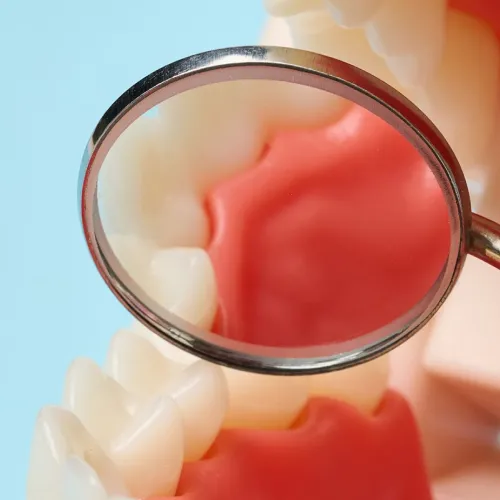
Best Mouthwash for Gum Disease: What Actually Works (and What Doesn't)
Looking for the best mouthwash for gum disease? Discover what works to fight gingivitis, top alcohol-free rinses, and expert picks. Read our full guide today!
Read More

General Dentistry
Therapeutic mouthwashes can reduce plaque, fight gingivitis, and freshen breath — but they can't reach deep periodontal pockets, and using them incorrectly cancels out their benefits. Here's what Kissimmee patients need to know before grabbing a bottle off the shelf. If you're already noticing early warning signs, learning about gum disease gingivitis can help you understand what you're up against.
Most people brush, then immediately rinse. It feels logical. But if your toothpaste contains Sodium Lauryl Sulfate (SLS) — the ingredient that creates foam — and your mouthwash contains Cetylpyridinium Chloride (CPC) or Chlorhexidine, there's a real chemical conflict happening.
SLS is a negatively charged (anionic) surfactant. CPC and Chlorhexidine are positively charged (cationic) antibacterial agents. Opposite charges attract and bind — which means SLS physically deactivates these active ingredients before they can do their job. You rinse, you spit, and the mouthwash never actually worked.
The fix is straightforward: wait at least 30 minutes after brushing before using a CPC-based or prescription Chlorhexidine rinse. Alternatively, switch to an SLS-free toothpaste. Either approach preserves the bioavailability of your mouthwash's active ingredient.
According to the ADA, some toothpaste ingredients can form complexes that reduce a mouthrinse's effectiveness — which is why manufacturers sometimes recommend a specific order for product use. This isn't a minor technicality. It's the difference between a product that actively reduces gingivitis and one that just freshens your breath temporarily.
Choosing "alcohol-free" is a smart starting point for gum-sensitive patients. But not all alcohol-free formulas work the same way. A Healthline overview of best mouthwashes highlights several active ingredients worth understanding before you buy.
CPC (Cetylpyridinium Chloride): Found in products like Crest ProHealth, CPC is a broad-spectrum antimicrobial that reduces bad breath, plaque, and early gingivitis. The trade-off: CPC binds to chromogens (color compounds in food and drink) and can cause temporary brown tooth staining. To minimize this, brush before rinsing, avoid dark beverages immediately after use, and schedule regular cleanings.
Hydrogen Peroxide: Used in whitening rinses, hydrogen peroxide targets anaerobic bacteria — the kind that thrive in low-oxygen gum pockets. It's effective but concentration matters. Over-the-counter formulas are typically safe; higher concentrations can cause tissue sloughing or sensitivity. Stick to products with the ADA Seal.
Essential Oils (Eucalyptol, Menthol, Thymol, Methyl Salicylate): Found in products like Listerine, these work well against plaque and gingivitis. They do contain alcohol in most formulations, though alcohol-free versions exist. They're less likely to cause staining than CPC.
Stabilized Chlorine Dioxide: A newer ingredient targeting sulfur compounds responsible for bad breath and some bacterial biofilm. It's gentler on the oral microbiome than broad-spectrum antiseptics, making it a reasonable option for daily maintenance.
The ADA's Mouthhealthy resource notes that therapeutic mouthwashes — those with active antibacterial or fluoride ingredients — provide measurable benefits beyond cosmetic freshening, including reducing gingivitis and slowing tartar formation.
This is the most important thing Central Florida patients need to understand: mouthwash reaches approximately 1 to 2 millimeters below the gumline when you swish. Periodontal pockets — the infected spaces between tooth and gum in moderate-to-severe gum disease — commonly measure 4mm, 6mm, or deeper.
That gap isn't a minor limitation. It means therapeutic mouthwash physically cannot contact the bacteria driving active periodontal disease. You can rinse faithfully twice a day and still have an advancing infection below the surface.
The NIDCR explains that once plaque hardens into tartar in these deep pockets, only professional cleaning can remove it — no over-the-counter product can penetrate or dissolve subgingival calculus. Staying current with your cleaning and exam appointments is one of the most effective ways to catch these issues before they advance.
For patients with moderate-to-severe periodontitis, the appropriate treatment is Scaling and Root Planing (SRP) — a deep cleaning procedure that physically removes tartar and bacterial deposits from below the gumline. After SRP, a therapeutic mouthwash becomes genuinely useful: it helps maintain cleaner surfaces and slows recolonization between maintenance visits.
Prescription Chlorhexidine rinse (such as Peridex) is often recommended post-SRP precisely because of its clinical-strength antibacterial action. But even this requires the mechanical work to come first. In some cases, an endodontic root canal may also be necessary if infection has spread to the tooth's inner structures.
Healthline's guide on mouthwash use reinforces that mouthwash is an addition to — not a replacement for — brushing and professional care. For gingivitis, that distinction is manageable. For periodontitis, it's critical.
Used correctly, therapeutic mouthwash is a real asset in your oral hygiene routine. It reaches between teeth and along the gumline in ways a toothbrush bristle can't always access. For patients managing early gingivitis or maintaining results after professional treatment, a well-chosen rinse makes a measurable difference.
Look for the ADA Seal of Acceptance when selecting any over-the-counter product — it confirms the formula has been tested for both safety and efficacy. Key benefits of therapeutic mouthwash include reducing plaque buildup, slowing tartar formation, decreasing gingivitis symptoms, and controlling bacteria that cause bad breath. Pairing a good rinse with cavity fillings and other restorative care when needed gives your mouth the best chance at long-term health.
Healthline's review of gingivitis home remedies notes that good oral care — brushing twice daily, flossing, and using a therapeutic rinse — remains the most effective strategy for preventing gingivitis from progressing. Home care supports professional treatment; it doesn't replace it.
If you're unsure whether you're dealing with gingivitis or something deeper, a professional exam is the only way to know for certain. Prestige Dental serves patients throughout Kissimmee and the greater Central Florida area with comprehensive family dentistry services. Our team can assess your gum health, recommend the right mouthwash for your specific situation, and determine whether professional treatment is needed. Book your appointment today.
Medical disclaimer: This article is for informational purposes only and does not constitute medical or dental advice. Always consult a licensed dental professional for diagnosis and personalized treatment recommendations.

Mon - Thur 9am-5pm
Wed Closed
Tue - Fri 9am-5pm
Sat - Sun Closed
312 W. Bass St.
Kissimmee, FL 34741
Local Dentist in Kissimmee, FL


