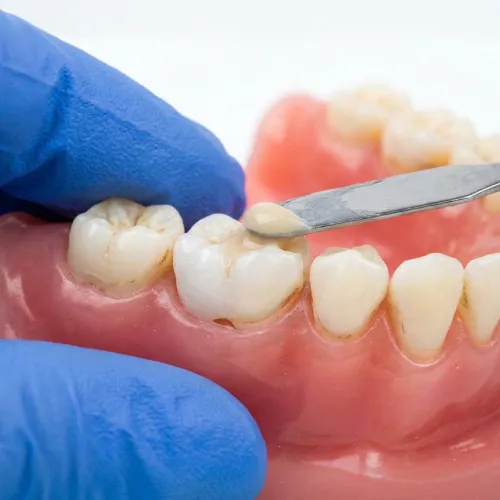
Gum contouring is generally safe when performed correctly, but cutting too much tissue — or ignoring the bone beneath it — can trigger irreversible recession and permanent damage. Understanding the biological limits that govern your gumline is the key to knowing whether this procedure is right for you.
The biological width rule: why removing too much gum destroys bone
For Kissimmee-area patients, most ask whether gum contouring hurts. The more important question is whether it respects your biology.
Your gums don't sit directly on top of bone. There's a natural 2mm buffer zone — called the biological width — between your gumline and the underlying jawbone. This space exists for a reason. It acts as a protective seal, and your immune system defends it aggressively.
When a dentist removes gum tissue without accounting for this zone, the body responds by destroying the bone underneath to recreate that 2mm gap. The result isn't just minor shifting. It's systematic bone loss, chronic inflammation, and gum disease recession that can loosen teeth over time.
This is exactly why Cleveland Clinic notes that providers must check bone levels around each tooth before contouring — and sometimes remove a small amount of bone to prevent the gums from migrating back or triggering that immune response.
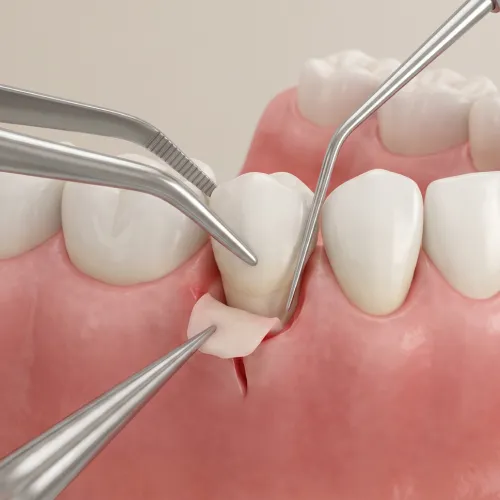
A procedure that only trims gum tissue (a gingivectomy) is very different from one that also reshapes the underlying bone (crown lengthening). If your dentist recommends gum contouring without mentioning bone levels, ask directly: "Do I need crown lengthening, or just tissue removal?" That one question can be the difference between permanent results and permanent damage.
According to the American Academy of Periodontology, periodontists are specifically trained to sculpt both gum tissue and underlying bone — which is why complex contouring cases are best handled by a gum specialist rather than a general dentist alone.
Laser contouring isn't automatically safer than a scalpel
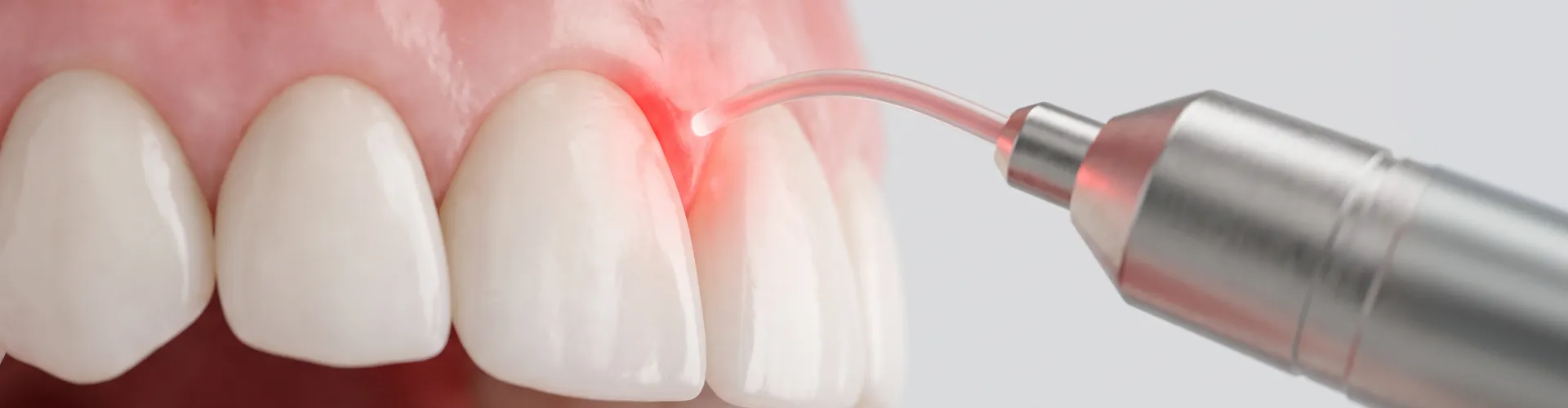
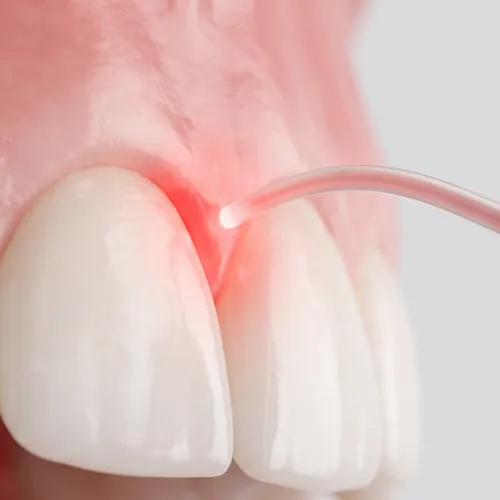
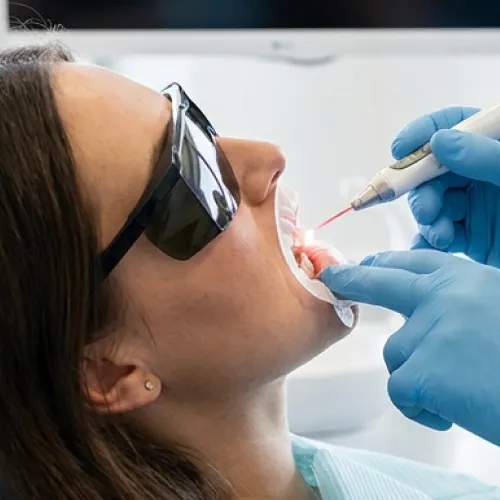
Laser gum contouring is widely marketed as a gentler, bloodless alternative to traditional surgery. And in the right hands, it genuinely is. But there's a hidden risk patients rarely hear about: thermal necrosis.
When a laser is held in one position a fraction of a second too long, or set to the wrong wattage, the heat can penetrate beyond the gum tissue and reach the delicate alveolar bone beneath. Once that bone dies from heat exposure, the overlying gum tissue has nothing to anchor to. It sloughs off. The result is irreversible recession and the appearance of dark "black triangles" between teeth.
Not all lasers carry the same risk profile. Erbium lasers are generally considered safer for procedures near bone because they're absorbed by water in the tissue rather than transferring heat deeply. Diode lasers, while effective for soft tissue, carry a higher risk of collateral thermal damage if used imprecisely. Healthline's overview of laser gum surgery emphasizes that it's critical to use a periodontist trained specifically in laser techniques.
Before any laser contouring, ask your provider which laser type they use, what wattage settings they apply, and how they prevent heat transfer to the bone. A confident, experienced provider will answer these questions without hesitation.
The CEJ boundary: what happens when contouring goes too far
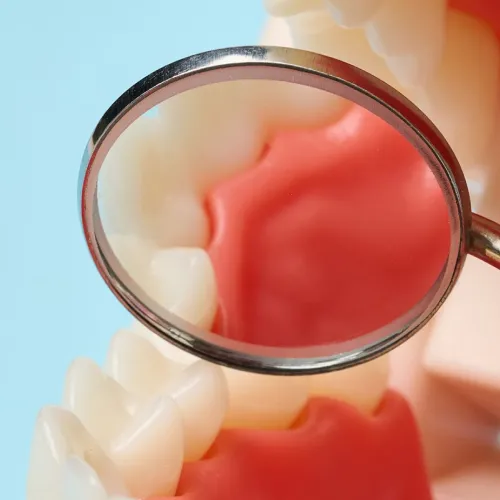
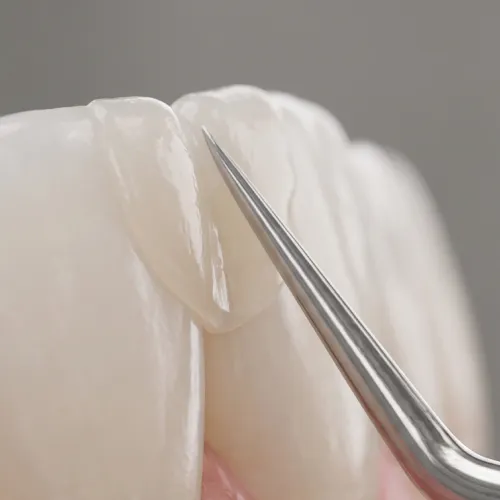
Your teeth aren't uniformly white all the way to the root. There's a visible line near the gumline called the cementoenamel junction (CEJ) — where the hard, white enamel crown ends and the softer, yellower root surface begins.
If gum contouring removes tissue past this boundary, it exposes cementum and dentin. Unlike enamel, these surfaces are porous, highly susceptible to decay, and contain microscopic tubules that lead directly to the nerve. The sensitivity can be severe and permanent. The exposed root surface also appears noticeably yellow, which is the opposite of the cosmetic result most patients are seeking.
This is particularly relevant for patients whose gummy smile is caused by vertical maxillary excess — a condition where the upper jawbone grows longer than typical. In these cases, a Healthline guide on gummy smiles explains that the excess display isn't from overgrown gum tissue at all, but from the jaw structure itself. Contouring tissue in these patients won't reveal beautiful white enamel — it will only expose painful root surfaces.
A thorough pre-operative exam, including X-rays to map the CEJ and assess bone levels, is non-negotiable before any contouring procedure. WebMD's overview of gum contouring confirms that dentists should review the planned new gumline with patients before any tissue is removed, ensuring the result lands above — not below — the CEJ.
Who is actually a good candidate for safe gum contouring
When the procedure is planned correctly, gum contouring has a strong safety record and produces permanent results. The key is candidacy.
Good candidates share a few common traits. They have healthy gums with no active periodontal disease. Their excess gum display is caused by true tissue overgrowth — not by jaw structure or lip hypermobility. And their CEJ is positioned in a location that allows safe tissue removal without exposing root surfaces.
Patients with active gum disease, significant bone loss, or recession are generally not candidates until those conditions are treated first. Attempting contouring on compromised gum tissue dramatically increases the risk of complications. Maintaining regular cleaning and exam appointments is essential for catching these issues before they disqualify you from elective procedures.
Recovery from a well-executed procedure is manageable. Cleveland Clinic's overview of gingivectomy notes that most people return to work within one to two days, with full gum healing occurring in about a week. Permanent results are achievable when the biology is respected and post-operative care instructions are followed closely.
Ready to find out if gum contouring is right for you?
The safety of gum contouring depends almost entirely on the planning, skill, and biological knowledge behind it. At Prestige Dental, we serve patients throughout Kissimmee and the greater Central Florida area with thorough consultations that evaluate your gum-to-bone ratio, CEJ position, and overall oral health before any treatment is recommended. If you're considering gum contouring — or exploring other aesthetic dentistry options to enhance your smile — contact us to schedule your evaluation.
Medical disclaimer: This article is intended for informational purposes only and does not constitute professional dental or medical advice. Always consult a licensed dental provider regarding your specific oral health needs.